
Which brand elements actually make you stand out?

Scale And Strategy
together with
Turing

This is Scale And Strategy, the hydraulic press of business newsletters (we pack everything you need to know into an easy daily read).
Here’s what we got for you today:
Google brings “vibe design” to AI UI building
Which brand elements actually make you stand out?
Google brings “vibe design” to AI UI building
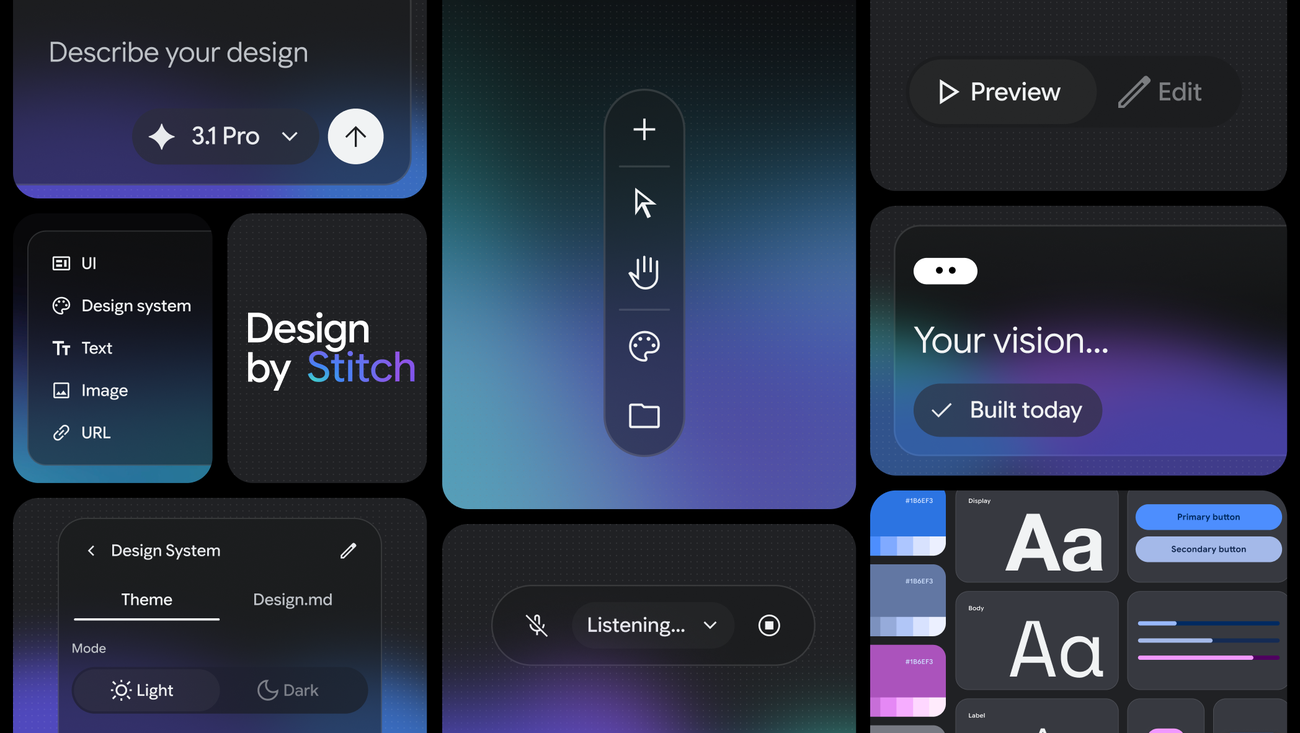
Google is trying to do for design what “vibe coding” did to developers: remove the friction and let you just… make things.
It just overhauled Stitch, turning it into a voice-enabled, infinite canvas that takes you from a half-baked idea to a working prototype. They’re calling the workflow “vibe design.” Yes, branding teams are still undefeated.
What actually changed
Infinite canvas + multi-agent workflows You can now drop in images, code, or a rough brief, and Stitch spins up multiple design directions at once. Think less “one mockup,” more “parallel universes of your product.”
Voice-enabled design (in preview) You can literally talk to it. It listens, edits, iterates in real time. Hands-free design is either the future or the beginning of people arguing with their laptops.
Instant interactive prototypes Static screens aren’t static anymore. Stitch turns them into clickable flows in seconds and even generates the next logical screens for you.
DESIGN.md standard Each project gets a built-in style system, and you can move those rules between Stitch and your coding tools. Finally, design systems that don’t die in a Figma file.
Why this matters
Design already got flipped once by AI. This is the second wave.
The real shift here isn’t just speed, it’s agency. You’re no longer pushing pixels. You’re directing systems that generate, test, and evolve interfaces in real time.
“Vibe design” sounds like something a product manager says right before shipping chaos. But underneath the name, the direction is obvious:
Design is becoming iterative, conversational, and dangerously fast.
And just like with “vibe coding,” the bottleneck isn’t tools anymore.
It’s taste.
The research accelerator for frontier AI labs
While data factories churn out quantity, leading AI labs need partners who co-own research goals and engineer the complex human-AI loops that push models from promising to state-of-the-art. Turing specializes in closing capability gaps through custom research acceleration.
Turing’s research-focused approach includes:
Co-owned experimental outcomes, not just data delivery, and vendor neutrality
Quality-by-design workflows with transparent data lineage and auditable results
Custom RL environments and SFT/RLHF/DPO pipelines designed for your benchmarks
Partner with the research accelerator that understands what frontier AI labs actually need.
Which brand elements actually make you stand out?
Every marketer’s little delusion: obsessing over a font for three hours just to accidentally recreate the Netflix logo.
Turns out, most of what feels like a “distinctive brand choice” is just background noise to normal people with jobs.
If you actually want to be memorable, here’s what works.
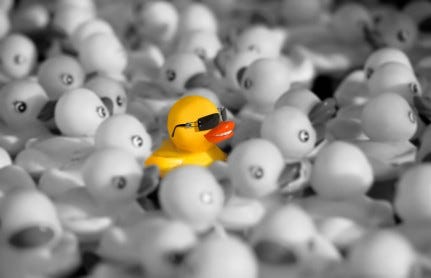
Mascots > everything else
Get yourself a character.
The M&M’s crew. Colonel Sanders. These things stick.
People are far more likely to associate a mascot with a brand than pretty much any other asset. It gives your brand a face, and humans are wired to remember faces way better than hex codes.
You can debate strategy all day. The brain already decided. It likes characters.
Logos and fonts still matter (just less than you think)
A strong logo like the Nike swoosh or a distinctive font like Coca-Cola’s script still does real work.
They’re not as powerful as a walking, talking mascot, but they’re reliable.
Why? Because they shortcut recognition. No reading required. Your brain just goes, “oh, that thing,” and moves on.
That’s the goal.
Your “unique” color isn’t unique
This one hurts people.
Around 82% of brand colors are shared across multiple companies. So your carefully chosen shade of “midnight ocean blue” is… also being used by 50 other brands.
Color alone doesn’t carry recognition. Not even close.
You’re roughly 2x more likely to be recognized through a mascot or logo than color by itself.
If you insist on color, use combinations
Color isn’t useless. It’s just lazy on its own.
What works is distinct combinations. Pair it with shapes, patterns, or contrast. Think Cadbury’s purple with gold accents.
It’s the system, not the single color, that creates memory.
Context > everything
Not every brand needs a mascot.
If you’re operating in a niche B2B market or living inside podcasts and audio ads, a visual character might be completely useless. No one sees it. Congrats, you built a ghost.
Match your brand assets to where your audience actually interacts with you.
Most brands aren’t forgettable because they picked the wrong font.
They’re forgettable because they tried to be “distinct” in ways nobody notices.
Was this email forwarded to you?
That’s it for today and as always It would mean the world to us if you help us grow and share this newsletter with other operators.
Our mission is to help as many business operators as possible, and we would love for you to help us with that mission!